
Declare state of emergency on substance abuse, mental health expert urges govt
A Consultant Psychiatrist serving at the Federal Neuro-Psychiatric Hospital in Aro, Abeokuta, Dr Abayomi Olajide, called upon the government on Wednesday to declare a state of emergency regarding substance abuse, cautioning that the escalating prevalence is exacerbating the mental health crisis and fostering an unsafe environment throughout Nigeria.
Olajide, who additionally serves as the Chairman of the Mental Health Action Committee in Ogun State, made these remarks on Wednesday during a mental health awareness walk held to mark the 2026 World Mental Health Day.
The awareness walk was coordinated by the Association of Resident Doctors of the Neuro-Psychiatric Hospital in partnership with Edijalo Health Services.
The Consultant Psychiatrist characterized the prevailing mental health challenges in Nigeria as an epidemic, attributing this situation to economic hardship, unemployment, insecurity, poverty, and various other social problems.
In statements to journalists, Olajide remarked, "The mental health issues in Nigeria have reached epidemic proportions, particularly given the economic downturn. Previously, we referenced 1 in 4 individuals experiencing mental health challenges.
"However, considering these economic difficulties, kidnapping, poverty, employment scarcity, and these social problems, I believe the prevalence has risen, and a greater number of individuals are now experiencing mental health challenges."
Olajide emphasized the necessity for enhanced government commitment to mental healthcare services, highlighting that treatment accessibility remains constrained, while numerous patients continue to bear treatment expenses independently.
He stated, "Fewer than 10% (per cent) of individuals have access to care, and the majority of this care is also self-financed. Health insurance coverage for mental health challenges remains inadequately developed.
“And so, we really need to speak out louder so that there can be proper focus on mental health services in terms of access to care, in terms of support for mental health services, and treatment.”
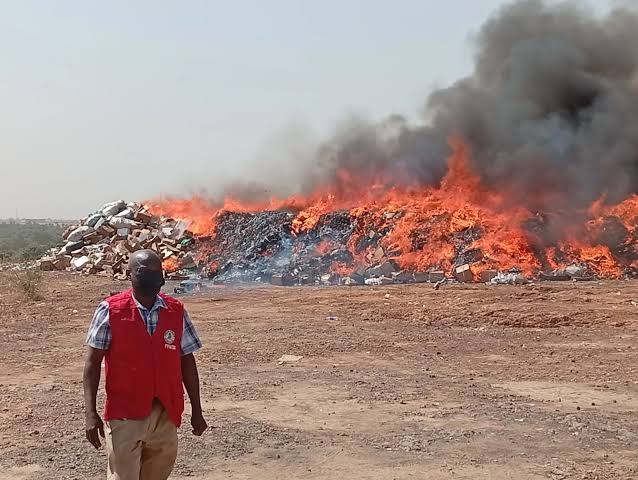
Speaking against the backdrop of the discovery of a methamphetamine laboratory in Ijebu-Ode, Ogun State, Olajide said the situation required urgent intervention, maintaining that the government should declare a state of emergency on substance abuse to prevent the prevalence from increasing in society.
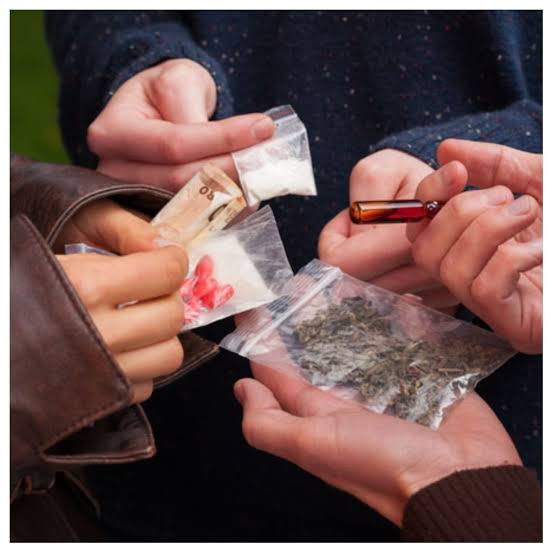
“The issue of substance abuse is another thing entirely. It is something that government should actually declare a state of emergency on. When you walk into any mental health facility, either private or public, you find out that 90 per cent occupancy of their bed spaces happens to be from substance use disorder.”
“When you look at secondary school students, by the time they are getting to JSS 3, SS 1, the level of use of codeine and use of substances is at a greater level,” he said
Olajide lamented the increasing exposure of young people to drugs, saying substance abuse was becoming prevalent among secondary school students, young people, including women.
“When you come to parks and garages, a lot of people cannot even function without using substances. And it is not just about males; even females are using substances.
“There are some people that are just experimenting with it. We need to catch them young so that we can reverse the trend. And those that are neck-deep in substance abuse, they also need to be properly rehabilitated and reintegrated back into the community.”
He called for a multi-pronged approach involving the education and health sectors, communities and other stakeholders to tackle substance abuse.
Also speaking at the event, the Acting Provost and Medical Director of the hospital, Dr Sunday Amosu, raised concern over the growing burden of mental health challenges in Nigeria, saying recent estimates suggested that as many as one in seven Nigerians may be affected.
He said the scale of the problem required concerted efforts from the government, families, religious organisations, non-governmental organisations and individuals.
He stated, “Some people initially said one out of 10; recently they are saying one out of seven. And if we are sincere with ourselves, even one out of 10 is a big chunk, how much more than one out of seven?
“If truly our current population statistics are estimated to be, I’m sure you know the last 2006 census the country’s population was put at 140 million, now we are talking about 250 million.
“For schizophrenia alone, it is said that about 1% of the general population has schizophrenia. So, 1% of 250 million having a particular mental illness is about 2.5 million. So, that’s a big chunk, so all hands must be on deck to combat the challenge of mental health,” Amosu stated