
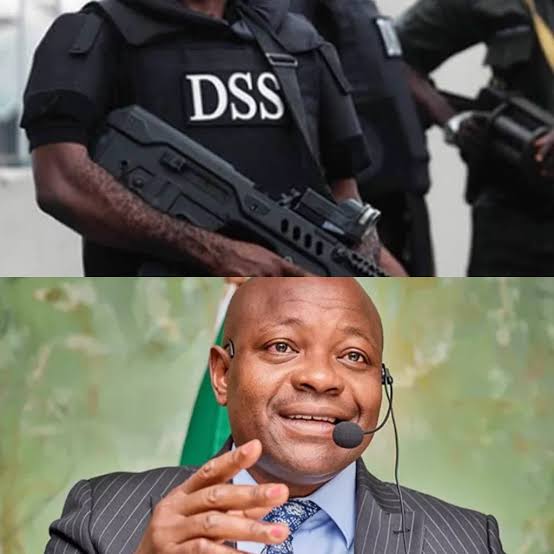
DSS DG bans operatives from arresting people over civil matters
The Director-General of the Department of State Services, Oluwatosin Ajayi, has instructed the agency's operatives to refrain from making arrests in civil matters.
As reported by The Sun, Ajayi made this announcement during a media interview on Thursday, clarifying that this directive is part of efforts to enhance compliance with the rule of law and to improve the agency's record on human rights.
The DSS leader indicated that since taking office, he has implemented reforms across five key areas: law enforcement, inter-agency collaboration, accountability, respect for human rights, and infrastructural and administrative improvements aimed at boosting operational efficiency.
He noted that these reforms have also established a clearer separation between civil and criminal issues within the agency.
Ajayi emphasized that his professional experience has revealed that the DSS had previously merged these two domains, underscoring that the application of force is not suitable in civil disputes.
"The use of force cannot be justified in civil matters. Even in some criminal cases, force is unnecessary," he remarked.
He referenced the situation involving political economist Prof. Pat Utomi, who faced allegations related to an attempt to create a "shadow government," explaining that the DSS chose to pursue judicial interpretation instead of arresting him.
"Instead of making an arrest, we sought judicial interpretation. The Court determined that his actions were unconstitutional, illegal, and posed a threat to national security," he added.
Ajayi also mentioned a case concerning the Socio-Economic Rights and Accountability Project, which approached the court regarding claims that two DSS operatives had invaded its premises.
He stated that this issue was addressed in court without any arrests, and the court ultimately awarded over N100 million in favor of SERAP
Asked whether the DSS now resorts to the courts in civil matters, Ajayi replied, “Yes. I have told my people that there should be no arrest in any civil case. And I’m sure you have found out that, even in cases involving journalists, we would rather approach the court because we do the same job.
“I call you guys our professional colleagues. The only difference is that, while you inform the public, we inform the Government. And because we inform the Government, our information is classified until we declassify it.”